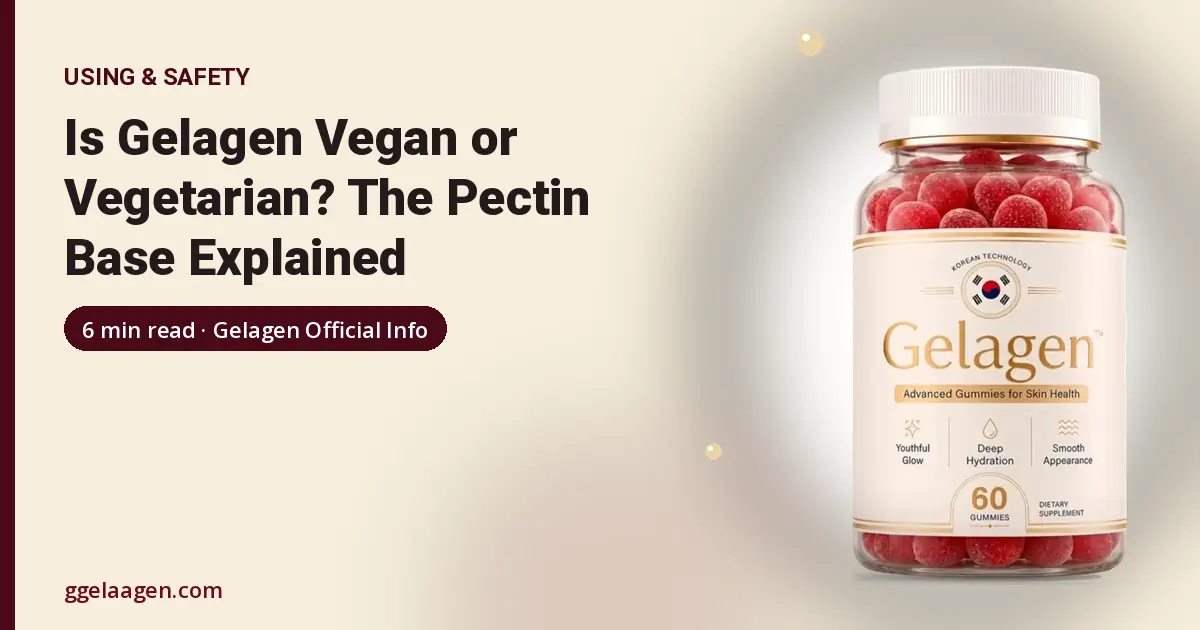
Gelagen is set with fruit pectin, not gelatine, and it contains no collagen, so the gummy base itself is plant-derived. Whether the whole product suits a strict vegan diet depends on the source of every ingredient, so check the current bottle panel or ask the official support team before you rely on it.
Key takeaways
- The gummy base is fruit pectin, a plant fibre, not animal gelatine.
- Gelagen contains no collagen; it supplies nutrients your body uses to build its own.
- Strict vegans should confirm ingredient sources on the current label.
- Plant-based eaters often benefit from reliable B12 and zinc sources.
Why gummy shoppers ask this first
You pick up a bottle of chewable vitamins, flip it over and spot the word "gelatine" halfway down the ingredient list. If you eat vegetarian, vegan or simply avoid pork or beef products, that one word ends the conversation.
It is a fair worry. Gelatine is the classic gelling agent in gummy sweets and many gummy supplements, and it is made by boiling down collagen-rich animal parts such as skin, hides and bones. That gives gummies their bouncy chew, but it also makes them off-limits for a lot of people.
So before you look at the nutrients on the Gelagen label, it makes sense to ask what is actually holding the gummy together.
Pectin vs gelatine: what sets the gummy
Gelagen is set with fruit pectin. Pectin is a natural fibre found in the cell walls of fruit, especially apples and citrus peel, and it is the same ingredient home cooks use to set jam. Here is how the two gelling agents compare:
| Feature | Fruit pectin | Gelatine |
|---|---|---|
| Source | Fruit cell walls (plant) | Animal skin, hides and bones |
| Texture | Softer, cleaner bite, melts quickly | Springy, chewy, rubbery |
| Heat behaviour | Holds shape well in warm weather | Can soften or stick when warm |
| Diet fit | Suits vegetarian, halal and kosher preferences at the base level | Excludes many vegetarians and some religious diets |
For you, that means the bulk of each gummy does not come from an animal. It also means the texture is closer to a fruit jelly than a chewy bear.
Vegetarian, vegan, or simply gelatine-free?
Here is the honest nuance. A pectin base removes the biggest animal ingredient found in typical gummies, which is why many vegetarians feel comfortable with pectin-set products. Strict vegan status is a higher bar, because it depends on where every component comes from.
Across the supplement industry, a few ingredients can come from either plant or animal sources:
- Vitamin D is often made from lanolin (sheep wool grease), though lichen-based versions exist.
- Coatings and glazing agents can be plant waxes such as carnauba or animal-derived ones such as beeswax.
- Colours and flavours are usually plant-based in berry gummies, but not always.
Our product facts confirm the pectin base and the absence of collagen, but they do not list the source of each vitamin. If strict vegan status matters to you, read the panel on your bottle or contact the official support team. Our guide on reading a supplement facts label shows where that information usually sits.
No collagen inside, and that is on purpose
Most collagen powders, drinks and chews are made from bovine hide or fish skin, so they are a non-starter for plant-based eaters. Gelagen takes a different route: it contains no collagen at all.
Instead, it supplies nutrients your body uses in its own collagen production, most notably vitamin C, which your cells need to stabilise new collagen fibres. You can read the step-by-step process in how your body makes collagen, and the deeper nutrition story in vitamin C and collagen.
If you have been weighing an animal-based powder against a gummy, our Gelagen vs collagen powder comparison lays out the practical differences.
Plant-based eaters: nutrients worth watching
Whatever you decide about supplements, a few nutrients deserve extra attention on a vegetarian or vegan plate:
- Vitamin B12. It is found naturally almost only in animal foods, so vegans need fortified foods or a supplement. The NIH vitamin B12 fact sheet lists vegans among the groups at higher risk of low levels. Gelagen provides 6 mcg as methylcobalamin per serving.
- Zinc. Beans, whole grains and seeds contain zinc, but also phytates that reduce how much you absorb. The NIH zinc fact sheet notes vegetarians may need more than the standard intake.
- Vitamin D. Few plant foods supply it, so sunlight, fortified foods and supplements fill the gap.
Folate, by contrast, is usually plentiful in diets rich in leafy greens and legumes. Our article on folate and B12 for skin renewal explains why those two work as a pair.
Deciding if Gelagen fits your plate
If your main concern was gelatine, the pectin base answers it. If you follow a strict vegan standard, take two minutes to confirm the ingredient sources on the current label before you buy, and remember that a 60-day money-back guarantee applies from the charge date if a product does not suit you.
Quick tip: Already taking a vegan multivitamin? Add up the overlapping nutrients first. Our guide on taking Gelagen with a multivitamin walks you through it.
For the full picture on dose, timing and safety, start with the complete Gelagen guide. When you are ready, you can compare Gelagen packages and choose the bottle count that matches how long you plan to test it.
Also worth reading: Why Consistency Beats Intensity in Skincare and Folate and B12: The Quiet Nutrients Behind Skin Renewal.
Frequently asked questions
Does Gelagen contain gelatine?
No. Gelagen gummies are set with fruit pectin, a plant fibre found in apples and citrus peel, rather than gelatine, which is made from animal skin, hides and bones.
Is Gelagen certified vegan?
Our product facts confirm the pectin base and that there is no collagen, but they do not state a vegan certification or the source of each vitamin. Check the current bottle panel or contact official support if strict vegan status matters to you.
Is a pectin gummy as effective as a gelatine gummy?
The gelling agent only shapes the gummy. The nutrients and their printed amounts are what matter, and pectin does not change what each serving supplies. Pectin simply gives a softer, fruit-jelly texture.
Safety note: Gelagen contains 5000 mcg biotin (tell your lab before blood tests) and 630 mcg vitamin A (ask your doctor first if pregnant, trying to conceive or breastfeeding). This article is educational and not medical advice. See our disclaimer.